
Your shop floor is about to find out what it actually knows

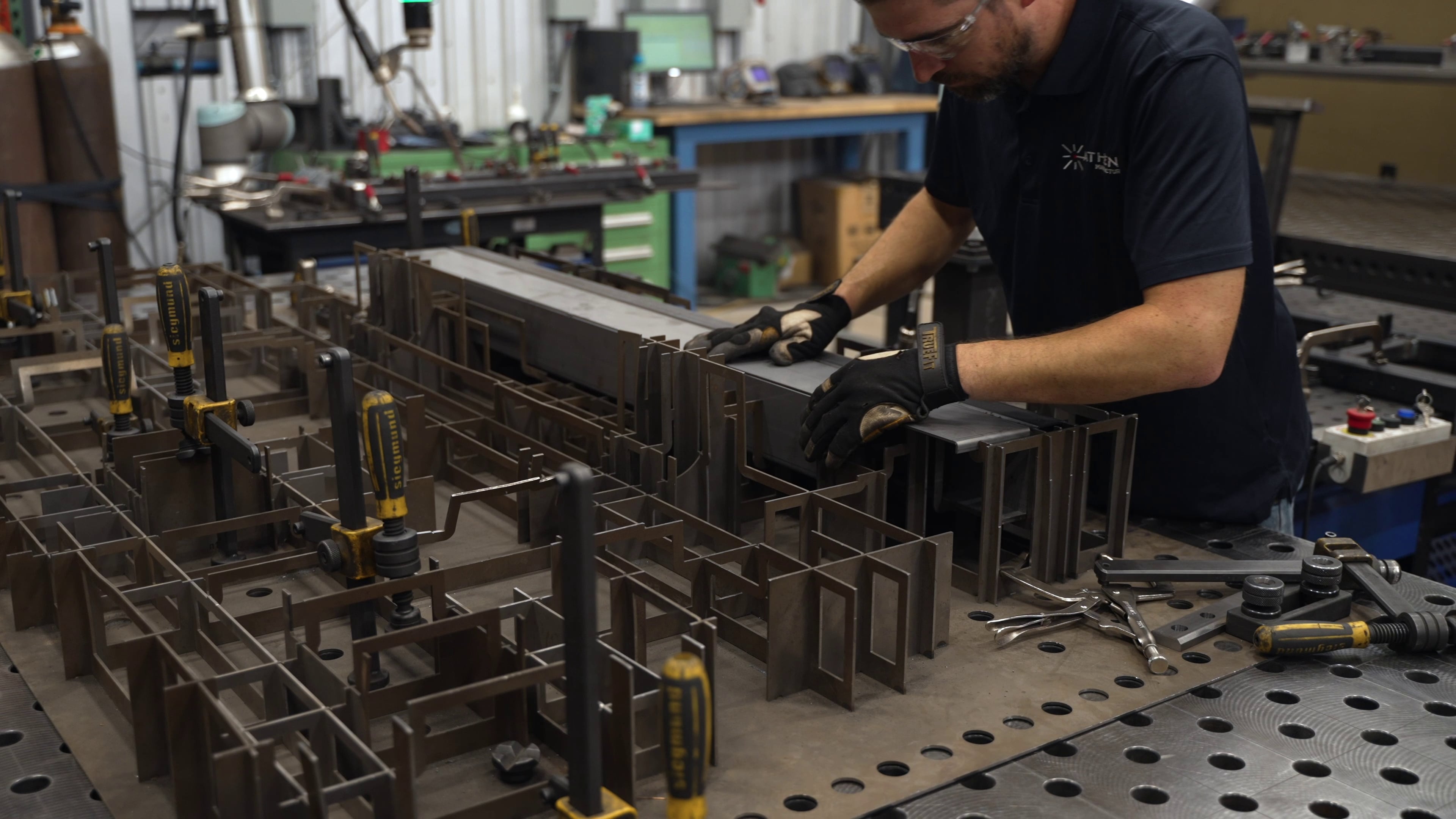
Most cobot pitches sell speed and consistency. Both are real. Both are also downstream of something the pitch usually skips.
Automation forces your shop to write down what it actually knows.
That's the part that catches almost every shop off guard. Not the technology. Not the programming. The fact that whatever was tribal knowledge — whatever lived in one welder's head, or got worked around by experience, or got fixed quietly on the night shift — has to become explicit before a cobot can do it.
Some shops are ready for that. Some aren't. The difference shows up fast.
What automation actually exposes
A Cobot Welder can only weld a part as well as the part is fixtured. It can only run as long as the inputs upstream are arriving on time. It can only produce consistent quality if the process itself is consistent.
Manual welding can hide a lot of slop. A skilled welder compensates for an off-spec fixture, adjusts for a bad cut, leans on muscle memory to make up for parameters nobody wrote down. The work gets done. The part ships. But the process stays in the welder's head — and walks home with them at the end of the shift.
A cobot doesn't compensate. It runs what you tell it to run. If your fixturing is inconsistent, the cobot will produce inconsistent welds. If your parameters are guesses, the cobot will execute guesses.
That's not a flaw in the cobot. It's the cobot doing its job — and giving you a brutally honest assessment of your shop in the process.
The two paths
For shops with documented, repeatable processes, this is a feature. Fixtures are already standardized. Parameters are already written down. Operators already work from the same playbook. Add a cobot, and the gains show up immediately. The shop floor barely changes — just gets faster, more consistent, more predictable.
For shops where the process lives in the hands of one or two senior welders, the cobot becomes a forcing function. Everything that used to get fixed by experience now has to get fixed in the system. Fixtures get standardized. Parameters get documented. Programs get versioned. The first 90 days are uncomfortable — not because the cobot is hard to run, but because the shop is finally writing down work that nobody had ever needed to write down before.
Read more about Best Practices for Fixturing with Cobots
That's not a setback. It's the most valuable thing automation will ever do for the business.
The documentation, the standards, the repeatable parameters — all of it outlasts any individual welder. Your best person can retire, your apprentice can train up faster, your second shift can run the same parts to the same spec. The shop floor gets stronger whether the cobot is running or not.
Mark Moye at Advanta Southeast described what it looked like coming in cold:
"The technology that we had learned was 25 years old. So anything new, we didn't have any experience with. We didn't have a team set up for it."
They didn't have an automation team. They didn't have a robotics background. They had a shop floor and a willingness to do the work. The platform met them where they were.
Read Advanta Southeast's case study
Why that's actually the real ROI
The numbers shops chase when they buy a cobot — units per day, cycle time, reduced rework — are real, but they're symptoms. The underlying thing the cobot delivers is clarity.
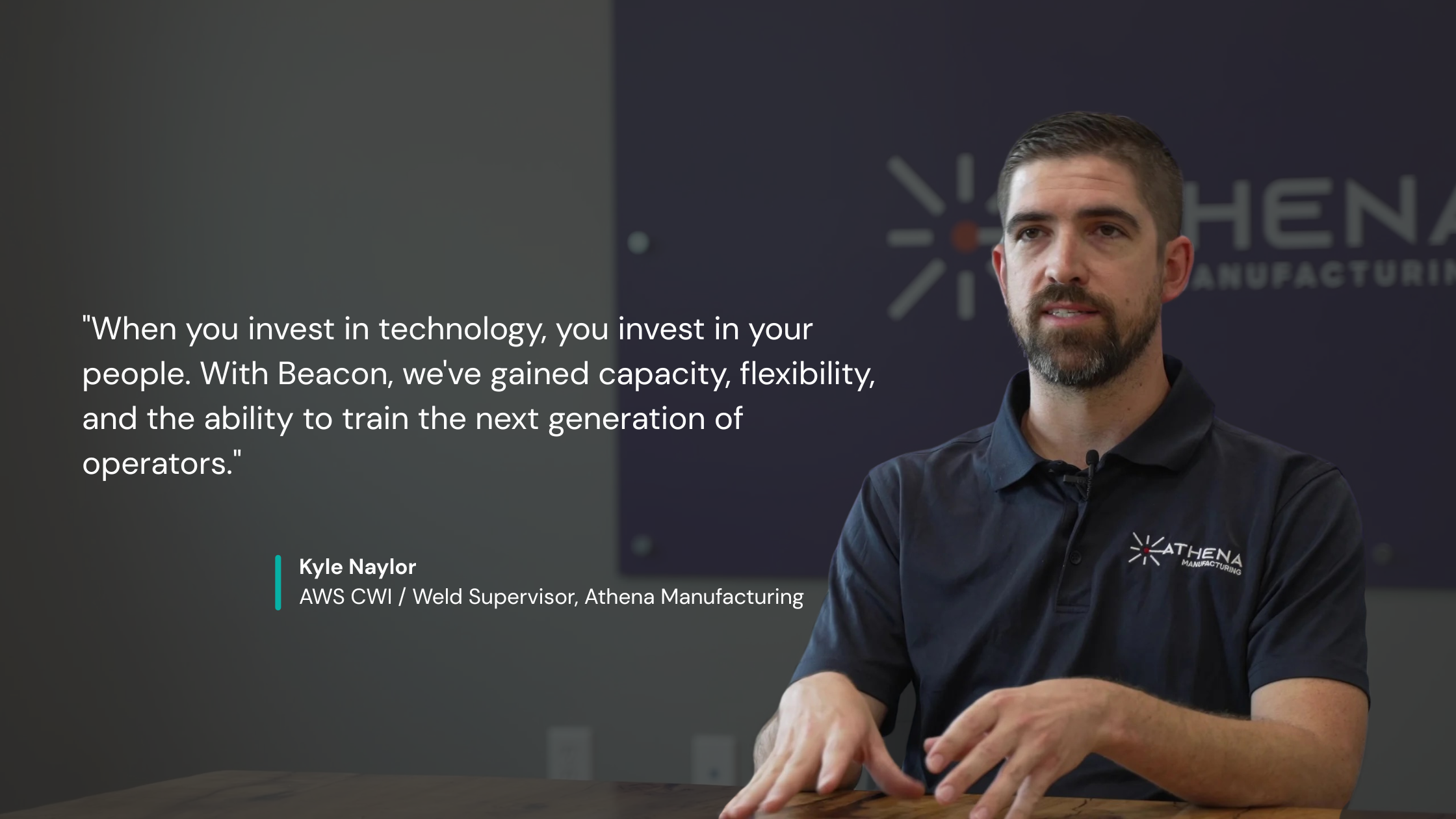
Kyle Naylor, Weld Supervisor at Athena Manufacturing, put it this way after deploying four Cobot Welders: "When you invest in technology, you invest in your people. With Beacon, we've gained capacity, flexibility, and the ability to train the next generation of operators."
Read Athena Manufacturing's case study
That last phrase is the one to pay attention to.
Athena didn't just get faster welding. They built a system where institutional knowledge doesn't depend on any single welder. Programs live in Beacon. Parameters are documented. New operators — including ones with no welding background — can come up to speed because the work is captured somewhere durable. The shop's intelligence stopped being a person and started being a process.
That's worth more than the welding output. The output is a quarterly result. The captured knowledge is a permanent asset.
Read more on how to plan for that transition: Welding Automation Planning Guide for 2026 →
Honest qualifying questions before you buy
If you're trying to figure out which path your shop is on, four questions cut through quickly.
-
Are your most-run parts documented? Not "could they be" — are they. Fixturing diagrams, weld parameters, sequence of operations. If the answer is "it's all in Mike's head," automation will work eventually, but cobot #1 is going to be a documentation project before it's a productivity project.
-
Is your process repeatable shift to shift? If your night shift produces measurably different output than your day shift on the same parts, the inconsistency lives in the process, not the welders. A cobot will expose exactly where.
-
Do you know your real arc-on time? Most shops dramatically overestimate this. If you don't know whether your welders are spending 15% or 40% of their day actually welding, you don't yet know what cobot #1 will save you — or what it will reveal about how the rest of the day gets spent.
-
Can you describe your fixturing approach to someone outside the shop? This is the tribal-knowledge test. If the answer requires three caveats and a "you have to see it," the fixturing is undocumented. That's fixable. But fix it before you spend $105,000 on a system that's going to surface every gap.
If most of your answers are yes, you're ready. The cobot will land in a shop that knows itself, and the gains will come fast.
If most are no, you can still automate — and many shops do — but cobot #1 will be a process project before it's a productivity project. Either path works. The shops that get blindsided are the ones who didn't know which path they were on.
The decision worth making
The best cobot deployments don't just produce parts. They produce a stronger shop floor — one where what the team knows lives somewhere durable, not in any single welder's hands.
That's the real thing automation gives you. The parts are downstream.
If you're evaluating your first cobot now, the question worth asking isn't will the cobot run. It's what will the cobot expose. The answer determines what your first 90 days actually look like — and the shops that walk in knowing the answer are the ones that come out the other side faster, stronger, and more honest about how they actually work.
That's the version of automation worth buying. Not faster welding. A clearer shop.
Where to go from here:
- Talk to someone about your shop's readiness → Contact
- Read the full argument for platform-first thinking → Read the blog
- Learn how the Beacon platform captures shop-floor knowledge → Beacon Platform